


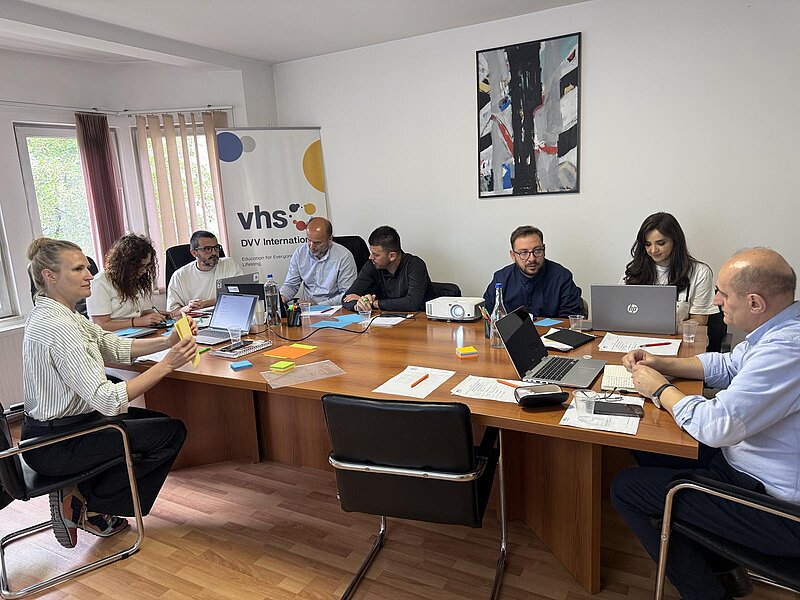
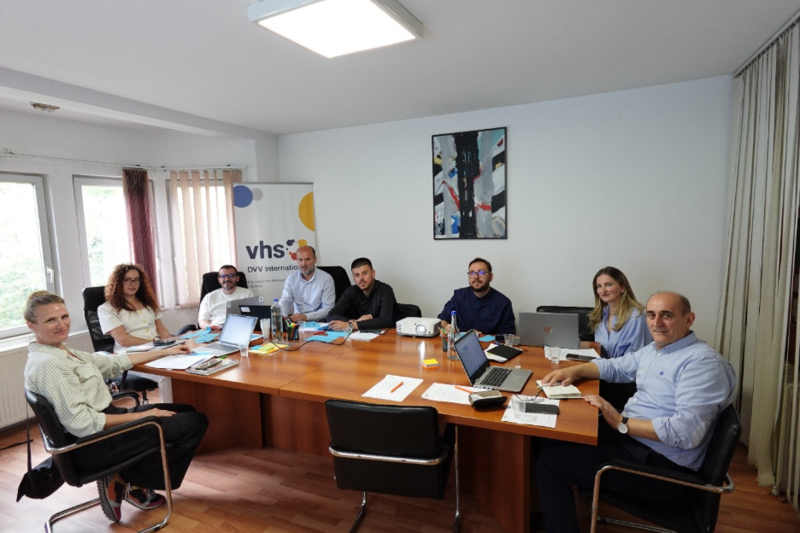
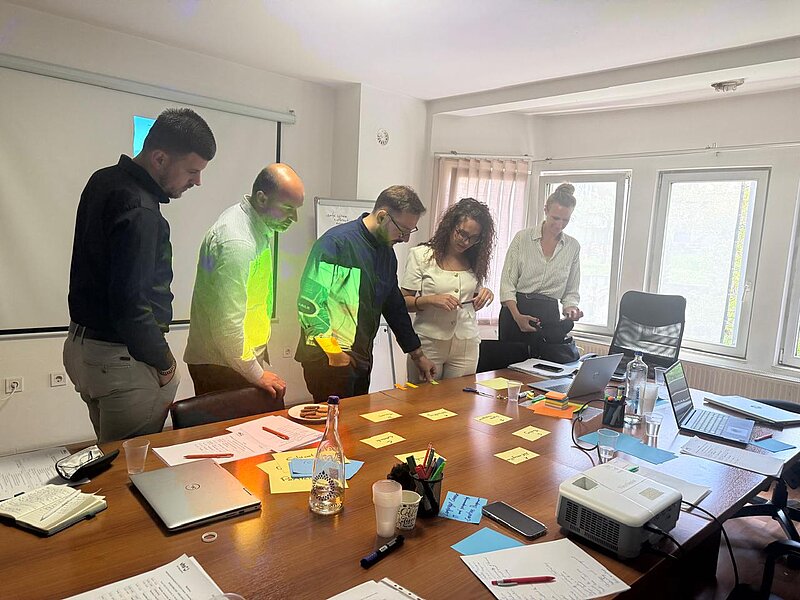
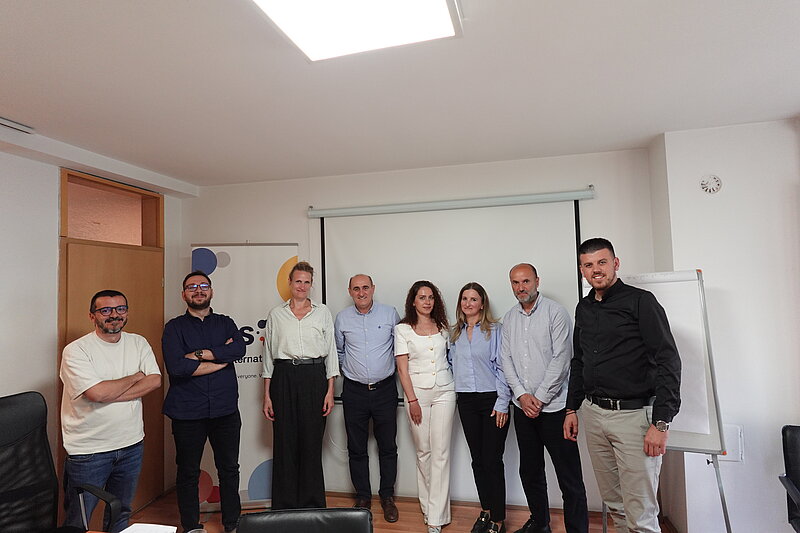
On 28 April 2026, a workshop on organizational development based on Curriculum InstitutionALE (CI) was held at the DVV International office premises in Kosovo. The workshop introduced CI and provided guidance for its use to strengthen the capacities and improve the services of YALECs.
The workshop was attended by nine participants, including representatives of DVV International Kosovo, Ms. Katrin Denys, Regional Director for South-Eastern Europe and the Caucasus, and representatives of NGO THY/YALEC Prizren, NGO LYAC/YALEC Peja, and NGO Hareja/YALEC Vushtrri. Ms. Denys, as an expert directly involved in the development of Curriculum InstitutionALE, was invited to provide her expertise on the effective use and implementation of CI in Kosovo. The workshop was opened by Mr. Ramadan Alija, Director of DVV International Kosovo, who presented the ALE system in Kosovo.
Ms. Katrin Denys then introduced Curriculum InstitutionALE as a practical framework for the organizational development of ALE institutions, highlighting the importance of institutional analysis, effective governance, quality assurance, and increasing the impact of educational services on local communities. The workshop concluded with discussions on the future development of the three YALECs, focusing on expanding educational programmes in areas such as financial literacy, digital skills, civic education, and personal development. Participants were introduced to the continuous improvement cycle, including needs assessment, planning, implementation, evaluation, capacity development, and monitoring.
During the workshop, the three YALECs preliminarily identified several priority areas for further institutional and organizational capacity development. They emphasized the need to strengthen their competencies in resource mobilization, fundraising, and advocacy to enhance their long-term sustainability and increase their visibility and influence within their communities. In addition, they highlighted the importance of improving their capacities in conducting labour market and community needs assessments, participant outreach and engagement, attracting and retaining qualified trainers and experts, developing strategic partnerships and networks, and strengthening their organizational management. Following the training, DVV International conducted an assessment and collected baseline data for organisational development.