


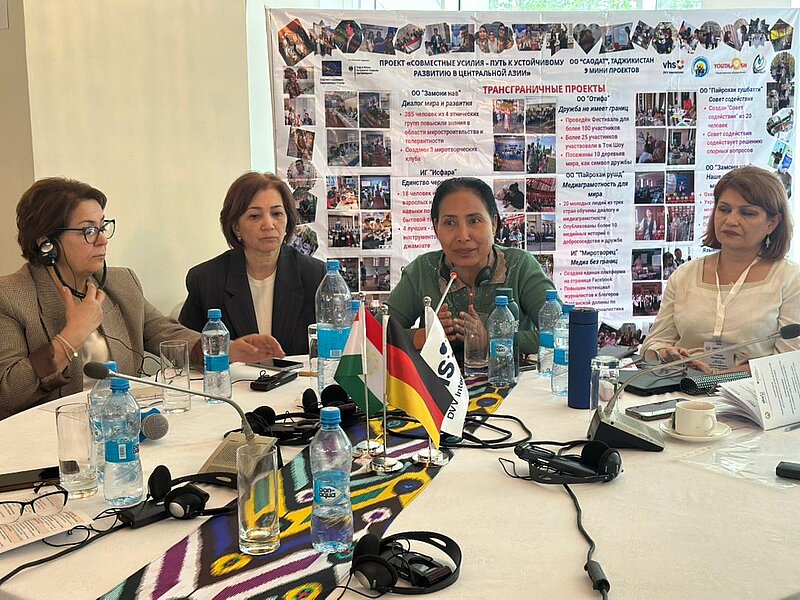
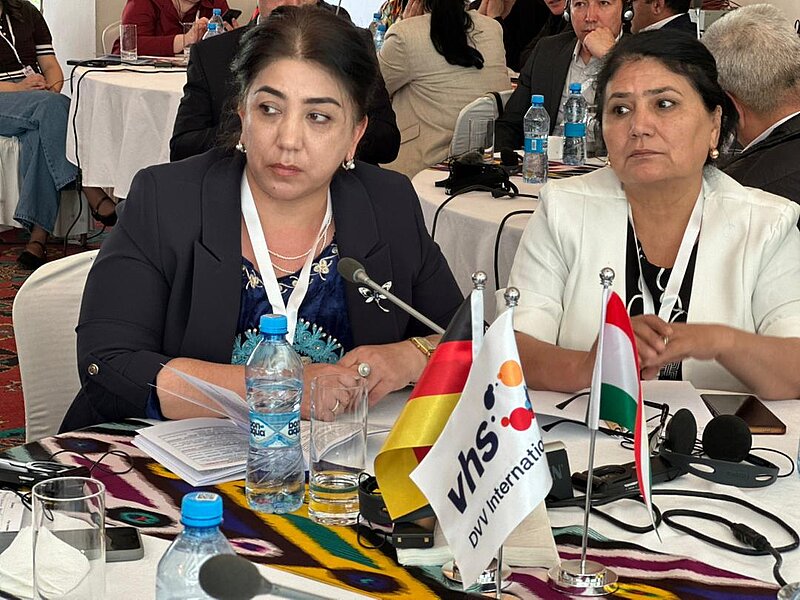

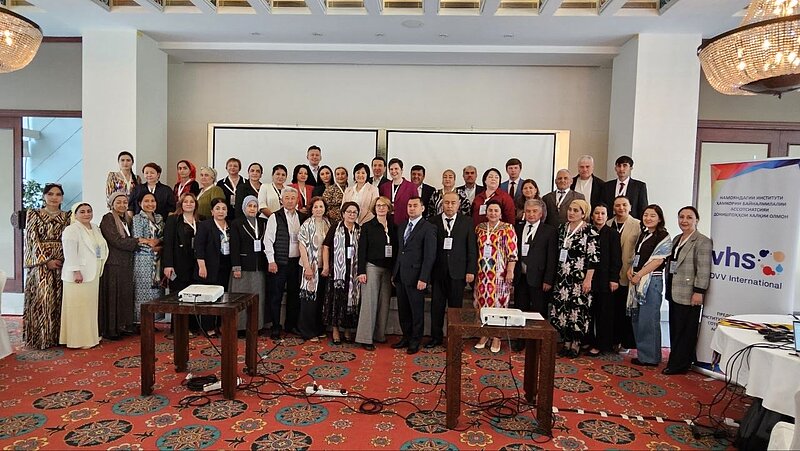
From 6 to 8 April 2026, Dushanbe, the capital of Tajikistan, became a platform for dialogue on the further professional development of civil society. The International Conference titled “Community Learning Centres in Tajikistan: Development Vector” brought together more than 50 experts from Central Asia and Europe to discuss the further development of adult education. The conference was driven by the implementation of the United Nations Sustainable Development Goals in Tajikistan, particularly Goal 4, which focuses on ensuring inclusive and equitable quality education and promoting lifelong learning opportunities for all.
As noted by the organizers, adult education in Tajikistan has been developing for over two decades and has accumulated significant experience within the post-Soviet region. Today, the country operates a network of adult education centres coordinated by the National Adult Education Centre. At the regional level, Community Learning Centres serve as a leading force of this system. According to Zarina Khalikova, Director of DVV International in Tajikistan, Community Learning Centres are not merely classrooms. They expand traditional courses through training in essential life skills, so that vulnerable groups can adapt to modern conditions and economic challenges.
The first day of the conference focused on global development models and the legislative aspects of adult education in Tajikistan. Participants explored the German model of Volkshochschulen, as well as relevant practices from Jordan, Moldova, and Cambodia. In particular, Galina Veramejchyk, Regional Director of DVV International for Central Asia, highlighted that the German model has been successfully applied for over a century, demonstrating the effectiveness of lifelong learning in economic development and in advancing civil society.
The second day placed emphasis on regional perspectives in Central Asia. Experts from Uzbekistan, Kyrgyzstan, and Tajikistan shared their experiences on various topics, ranging from learning in library spaces to the development of adult education centres across the region.
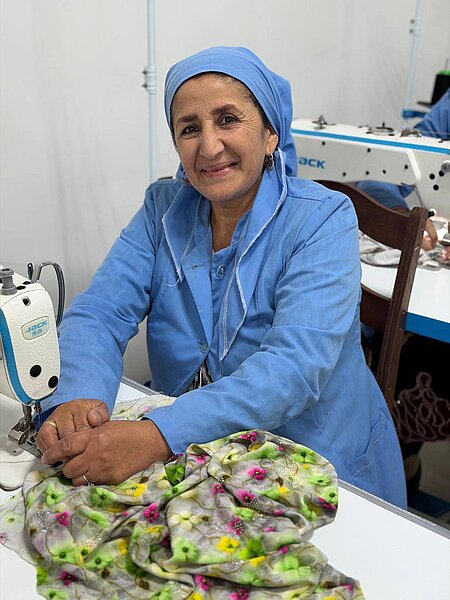
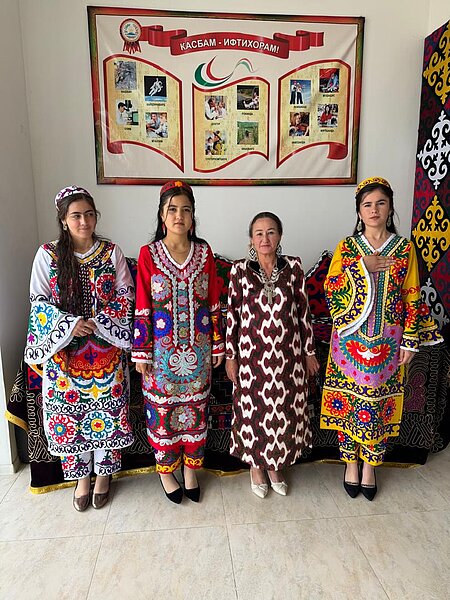
The final day of the conference connected theory with practice through field visits. Participants visited operational centres in Sebiston (Danghara district), Norak, and Vahdat, where they observed the work of Community Learning Centres firsthand. In an environment enriched by Navruz traditions, participants explored activities such as carpentry, handicrafts, sewing, cooking, and digital literacy training. As noted by Rano Jumaeva-Robak, Director of the Public Organization “Tomiris”:
“The purpose of establishing these centres and presenting their activities to guests was to show the reality. Through these centres, each participant could see and understand how lifelong learning changes people’s lives by providing essential skills that improve both individual well-being and community life.”
Overall, the conference identified several key development directions, including the digitalization of adult education programmes, strengthening the role of adult education in employment and community development, creating platforms for dialogue between government, business, civil society, and communities, and aligning legislation with current realities to support further progress.
The event is organized by the Country Office of DVV International in the Republic of Tajikistan with financial support from the German Federal Ministry for Economic Cooperation and Development (BMZ)